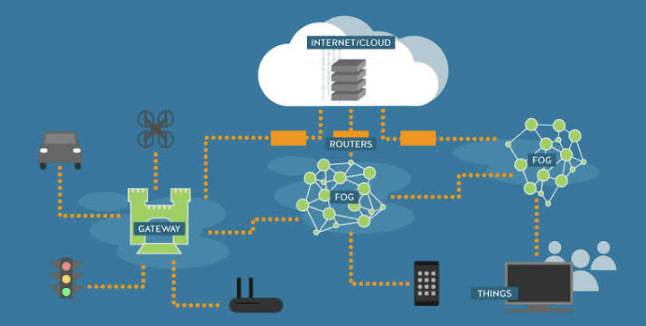

Emerging fog-based systems emphasize intelligent orchestration and governance near data sources, enabling policy-aligned behavior through AI-driven resource management. Privacy-preserving architectures combine local aggregation, federated learning, and lightweight cryptography with verifiable isolation to sustain latency and governance guarantees. Real-time streaming requires fault tolerance via edge caching and consensus-based resilience against churn and partitions. Across domains, end-to-end latency, resilience, and security shape scalable fog deployments, inviting further scrutiny of practical trade-offs and deployment patterns.
What AI and Orchestration Bring to Fog Clouds
AI and orchestration significantly reshape fog clouds by enabling intelligent, coordinated resource management closer to data sources. This landscape demands rigorous evaluation of AI governance and operational frameworks to ensure predictable behavior.
The approach emphasizes disciplined orchestration orchestration, aligning autonomous agents with policy, latency, and reliability metrics. Stakeholders gain clarity, enabling freedom to innovate within transparent, auditable boundary conditions and measurable performance guarantees.
Privacy-Preserving and Secure Fog Architectures
A key challenge for fog architectures is ensuring privacy and security without compromising low-latency responsiveness.
Privacy-preserving techniques, such as local aggregation, federated learning, and encrypted communications, mitigate exposure while sustaining edge efficiency.
Secure fogs rely on robust attestation, tamper-resistant hardware, and disciplined trust models.
Combining lightweight cryptography with verifiable isolation, architectures sustain data governance, resilience, and auditable privacy across distributed nodes.
Real-Time, Fault-Tolerant Streaming in the Fog
Edge caching reduces round trips and preserves freshness, while consensus and failover mechanisms ensure continuity despite node churn and network partitions. This enables resilient, scalable streaming without compromising responsiveness.
Use Cases and Evaluation Metrics for Emerging Fog Systems
Fog-based systems present a diverse set of use cases spanning smart cities, industrial automation, and pervasive sensing, each demanding specific evaluation criteria to validate performance and reliability.
Use cases emphasize end-to-end latency, resilience, and security, with metrics including responsiveness, throughput, and fault-tolerance.
Latency optimization and data locality emerge as core evaluative axes for scalable, privacy-preserving fog deployments.
Frequently Asked Questions
How Scalable Are Fog Networks Across Heterogeneous Edge Devices?
Fog networks exhibit limited scalability across heterogeneous edge devices due to scalability challenges and fragmented architectures; effective heterogeneous device orchestration requires standardized interfaces, dynamic resource discovery, and robust orchestration policies to harmonize diverse capabilities and workloads.
What Are the Energy Implications of Fog Computing Deployments?
Energy implications of fog computing favor energy efficiency through hardware acceleration and careful resource orchestration, balancing latency optimization with reliability engineering; data sovereignty concerns influence deployment choices, while scalable architectures impact overall energy footprints and sustainable performance.
How Do Fog Systems Handle Data Governance and Compliance?
Fog systems implement data governance through centralized and edge-enforced policy enforcement, ensuring data locality and tamper resilience; data stewardship delegates stewardship roles, audits provenance, and enforces compliance across nodes, with rigorous logging for accountability and auditable policy adherence.
See also: newsversa
What Are Failure Modes Unique to Fog Hierarchies?
A fog hierarchy resembles a multi-reticulated tree, where failure modes propagate along branches. Fog-specific failures include latency variability at edge nodes and firmware fragmentation increasing heterogeneity, reducing coordination and complicating recovery, testing, and reliability guarantees.
Can Fog Analytics Rival Cloud-Level Decision Accuracy?
Fog analytics can approach cloud precision in certain tasks, but edge learning gaps, real time inference latency vs batch processing tradeoffs, and distributed model updates constrain parity with cloud-level decision accuracy.
Conclusion
In the fog, AI-driven orchestration braids efficiency with governance, delivering policy-aligned resource flows. Yet privacy-preserving architectures cast a parallel shadow—local aggregation and lightweight cryptography confine data, yielding safer surfaces while risking occasional latency. Real-time streaming mirrors resilience, with edge caching and consensus resisting churn, though complexity grows. Juxtaposed, these strands form a triad: precision analytics, secure locality, and robust continuity—each essential, each challenging. Together they sketch a fog that is intelligent, private, and persistently reliable.